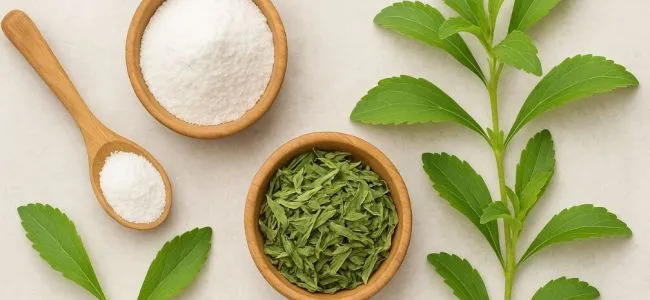
Stevia extract is now a standard tool for sugar reduction, but not all stevia is the same. The grade you choose determines how sweet it is, how clean it tastes, how well it behaves in your process, and how much it costs to use. A grade that works in a tabletop sweetener can fall short in a soft drink, and the cheapest powder per kilogram is not always the cheapest per unit of sweetness.
This guide walks through the main factors to weigh when selecting a stevia extract, with extra focus on stevia for beverages, and explains what to look for in a reliable stevia supplier in Australia.
Understanding Stevia Glycosides
The sweetness in stevia comes from steviol glycosides, a family of compounds extracted from the leaves of the stevia plant. The best-known are stevioside and the rebaudiosides, including Reb A and Reb M.
They are not equal in taste. Reb A is widely used and delivers strong sweetness. Reb M is a minor glycoside that is generally associated with a cleaner, more sugar-like taste. Extracts that contain a higher share of other glycosides tend to show more bitterness or a lingering, liquorice-like note.
That is why the glycoside profile matters more than the headline label “stevia”. It is the first thing to check on any specification.
Factor 1: Glycoside Profile and Purity
The Aojing Stevia range includes four grades, so formulators can match the grade to the job. The sweetness figures below are those stated by the supplier and are approximate. Actual perceived sweetness varies with the product, the sweetness level you target and the other ingredients in the formula.
| Grade | Supplier-stated sweetness vs sugar | General flavour character | Typical fit |
| Rebaudioside-A 97% | About 400x | Strong, clean sweetness from a high-purity Reb A | Beverages, dairy, tabletop |
| Rebaudioside-A 60% | About 300x | Sweet, with a higher share of other glycosides | Cost-sensitive applications |
| Steviol Glycoside 80% | About 100x | Broader glycoside mix, lower intensity | General food applications, syrups |
| Rebaudioside-M 95% | About 300x | Cleanest profile. Supplier states no bitter aftertaste | Premium beverages, sugar-reduced products where taste is critical |
Higher purity usually costs more per kilogram, but it often means a cleaner taste and less need for masking. Always confirm the exact glycoside composition on the specification and certificate of analysis for the lot you are buying.
Factor 2: Taste Profile and Aftertaste
Sweetness is only half the story. Stevia sweetness often builds more slowly than sugar and can linger, and some glycosides add bitterness or a metallic or liquorice note at higher use levels.
Practical ways to manage this:
- Choose the grade for the taste target. Where a clean taste is non-negotiable, Reb M or high-purity Reb A is the usual starting point.
- Do not push the use level. Replacing all the sugar with stevia alone often exposes aftertaste. Replacing part of it with a blend usually tastes better.
- Blend sweeteners. Combining stevia with a bulk sweetener or another sweetener can round out the profile and add body.
- Balance with acid and flavour. The right acid can soften lingering sweetness and make fruit flavours taste fuller.
Sensory trials in the real product are essential. Taste in water tells you very little about taste in a finished formulation.
Factor 3: Stevia for Beverages
Beverages are the largest battleground for sugar reduction, and the most demanding place to use stevia. Everything is exposed: there is no fat, starch or crumb to hide aftertaste, and acidity, carbonation and heat processing all interact with the sweetener.
Key points for stevia in beverages:
- Solubility and clarity. Grades differ in how quickly and completely they dissolve. Check dissolution in your actual liquor, and in your processing order, to avoid haze or undissolved particles.
- pH and heat stability. Stevia glycosides are generally regarded as stable across the heat and pH ranges used in most beverage processing. Aojing Stevia is described as heat and pH-stable, but confirm stability through your own pasteurisation and shelf-life trials.
- Interaction with acids. Acidity shapes how stevia tastes. A rounded acid such as FUSO Malic Acid can help balance lingering sweetness in fruit-flavoured drinks.
- Carbonation and flavour. Carbonation can shift sweetness perception, so adjust the use level in the carbonated version rather than copying a still formulation.
- Body and mouthfeel. Removing sugar removes body. Bulk sweeteners such as BLB Erythritol or ALLUPURE Allulose, or a fibre, can help restore it.
Example: a sugar-reduced soft drink
A manufacturer reduces the sugar in a citrus soft drink and adds a stevia extract to make up the sweetness. The first trial tastes thin, and the sweetness lingers after swallowing. The team moves to a cleaner grade, such as Reb M, lowers the stevia dose, replaces some of the lost body with a bulk sweetener, and adjusts the acid blend. The result is confirmed with a sensory panel and through shelf-life testing. The exact combination will differ for every product, but the process is the same: grade first, then blend, then balance.
For more on how acids shape this balance, see our guide to how acidulants affect sourness, flavour balance and product stability.
Factor 4: Application Fit Beyond Beverages
Aojing Stevia is listed for use across a wide range of applications. The grade that suits a drink may not be the one that suits other products.
- Bakery: stevia provides sweetness but not the bulk, browning or moisture retention of sugar, so it is normally combined with bulking ingredients and fibre.
- Dairy and ice cream: fat and protein can mask some aftertaste, which often makes more cost-effective grades workable here. Texture still needs attention.
- Confectionery and chewing gum: stevia is often used alongside polyols that supply bulk and structure.
- Syrups and tabletop sweeteners: high-intensity grades are common, and a clean taste profile matters because the sweetener is tasted directly.
- Nutraceuticals: in powders and functional products, flavour masking and solubility are the main considerations.
Factor 5: Stability and Processing
Stevia glycosides are generally considered robust under heat and across a wide pH range, which is one reason they suit baking, cooking and beverage processing. Even so, treat stability as something to verify, not assume.
- Test the ingredient through your own heat treatment and hold times.
- Check taste and sweetness at the end of shelf life, not only at day one.
- Store the powder in sealed packaging in a cool, dry place, away from direct sunlight.
- Confirm how the extract behaves in the presence of your acids, flavours and other sweeteners.
Factor 6: Cost-in-Use, Not Just Price per Kilogram
Comparing stevia grades on price per kilogram can mislead. A more intense, higher-purity grade may cost more per kilogram but need much less powder to deliver the same sweetness, and it may need less flavour masking.
A better comparison is the cost per unit of sweetness delivered in your formulation, plus any cost of masking agents or extra blending needed to correct taste. Run the numbers on the finished recipe, not the raw material alone.
Factor 7: Supplier, Documentation and Supply
The extract is only as good as the supplier behind it. Before committing, confirm:
- The glycoside composition on the specification and certificate of analysis.
- Allergen, GMO and country-of-origin statements, and traceability to batch level.
- Pack sizes and minimum order quantity. Aojing Stevia is offered in 1 kg and 10 kg corrugated boxes with a 1 kg minimum order, which makes trials practical before scaling up.
- Lead times and stock position. The product page lists immediate supply for Aojing Stevia.
- Technical support for trials and troubleshooting.
For a fuller framework, read our guide on how to qualify a bulk food ingredient supplier for commercial production.
Regulatory and Labelling Considerations
Steviol glycosides are permitted food additives in Australia and New Zealand under the Australia New Zealand Food Standards Code, which is administered by FSANZ. Permissions are subject to conditions, including the food categories and maximum levels allowed, and labelling requirements apply.
Because rules differ by product category and claim, confirm your intended use and any nutrition or sugar-related claims with FSANZ or your regulatory adviser before launch.
Stevia Selection Checklist
- Define the target sweetness reduction and the product category.
- Choose the glycoside profile (Reb A, Reb M or mixed glycosides) to match your taste target.
- Confirm purity and composition on the specification and COA.
- Trial the grade in the real product, in the right processing order.
- Check solubility and clarity, especially in beverages.
- Test heat and pH stability through your process and shelf life.
- Consider blending with bulk sweeteners, acids and fibre for body and balance.
- Compare cost per unit of sweetness, not price per kilogram.
- Confirm documentation, traceability, pack size, MOQ and lead time.
- Check regulatory permissions and labelling for your product.
Frequently Asked Questions
1. What is the difference between Reb A and Reb M?
A: Both are steviol glycosides. Reb A is the more common and delivers strong sweetness, while Reb M is a minor glycoside generally associated with a cleaner, more sugar-like taste and less bitter aftertaste, usually at a higher cost.
2. Is stevia heat stable?
A: Steviol glycosides are generally regarded as stable under normal cooking, baking and beverage-processing conditions. Aojing Stevia is described as heat and pH stable, but you should confirm performance in your own process and shelf-life trials.
3. Which stevia grade is best for beverages?
A: There is no single best grade. Where taste is critical, high-purity Reb A or Reb M is the usual starting point. Where cost matters more, a broader glycoside grade used in a blend can work. Sensory trials in your own beverage decide the answer.
4. How sweet is stevia compared with sugar?
A: It depends on the grade and the formulation. Supplier-stated figures for the Aojing range run from roughly 100 to 400 times the sweetness of sugar, but perceived sweetness in a finished product will vary.
Final Thoughts
Selecting a stevia extract is a formulation decision, a cost decision, and a supply decision at once. Start with the glycoside profile, test the grade in your real product, build the right blend around it, and compare options on cost-in-use. Done well, stevia can deliver real sugar reduction without compromising taste.
Food Ingredients Australia supplies Aojing Stevia in Reb A, Reb M and steviol glycoside grades, alongside complementary ingredients such as Monk Nectar Monk Fruit Extract, JK Sucralose, bulk sweeteners and acidulants, to manufacturers across Australia and New Zealand. To request specifications, documentation or samples, contact our team.